The Citric Acid Cycle Explained
Central metabolic hub for energy production and biosynthesis
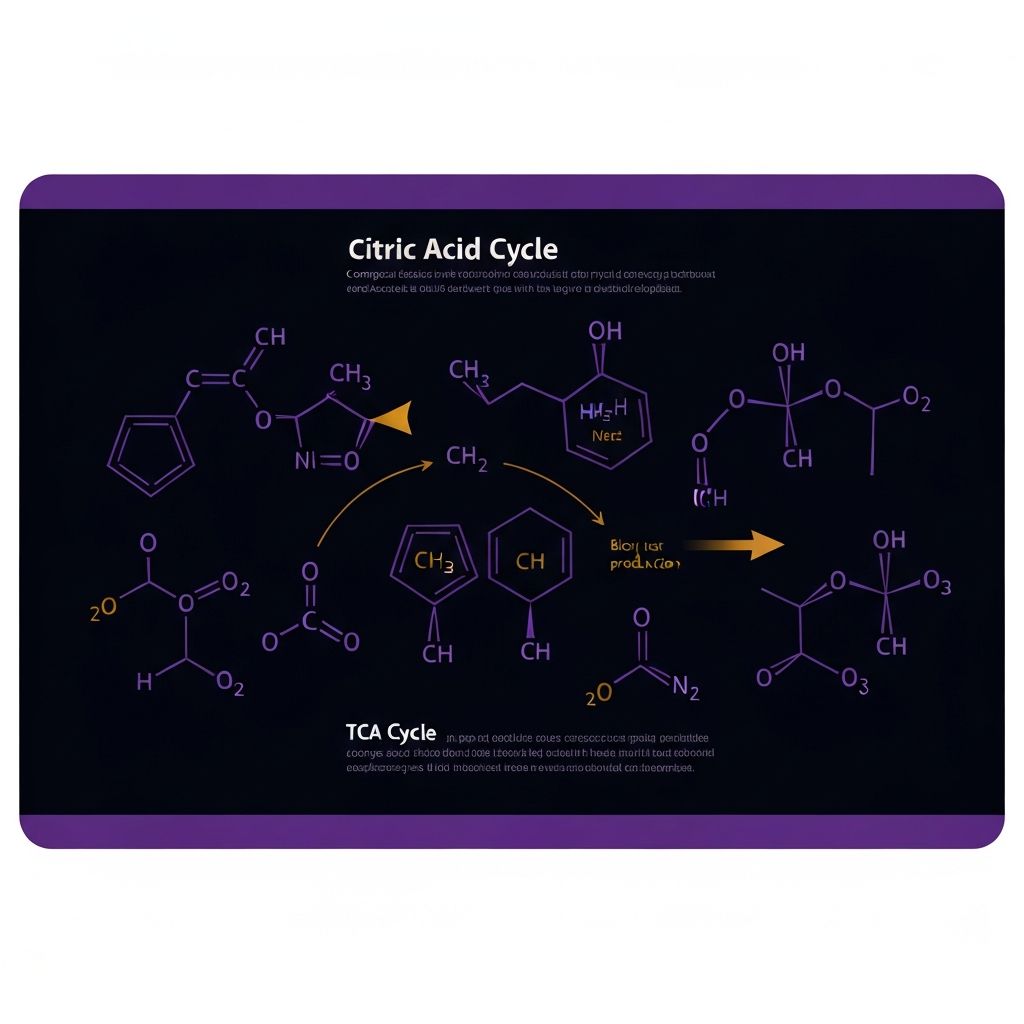
Overview of the Citric Acid Cycle
Also known as the Krebs cycle or tricarboxylic acid (TCA) cycle, this series of chemical reactions is the central metabolic hub that oxidises acetyl-CoA derived from carbohydrates, fats, and proteins. The cycle operates in the mitochondrial matrix and is crucial for ATP generation and providing intermediates for biosynthetic pathways.
Historical Context
The citric acid cycle was elucidated through the pioneering work of Hans Krebs in the 1930s, earning him the Nobel Prize in Physiology or Medicine. The discovery represented a fundamental breakthrough in understanding cellular energy production and metabolism.
Citric Acid Cycle Reactions
Step 1 - Condensation: Acetyl-CoA (2 carbons) condenses with oxaloacetate (4 carbons), catalysed by citrate synthase, producing citrate (6 carbons) and releasing CoA. This reaction is essentially irreversible under physiological conditions and is the committed step of the cycle.
Step 2 - Isomerisation: Citrate is converted to isocitrate through the intermediate cis-aconitate, catalysed by aconitase. This reaction rearranges the molecular structure whilst maintaining the same molecular formula.
Step 3 - Oxidative Decarboxylation: Isocitrate is oxidised and decarboxylated to alpha-ketoglutarate by isocitrate dehydrogenase, generating NADH and releasing CO2. This is a key regulatory step of the cycle.
Step 4 - Oxidative Decarboxylation: Alpha-ketoglutarate is oxidised and decarboxylated to succinyl-CoA by the alpha-ketoglutarate dehydrogenase complex, generating NADH and releasing CO2. This is a highly regulated step requiring multiple cofactors including thiamine pyrophosphate.
Step 5 - Substrate-Level Phosphorylation: Succinyl-CoA is converted to succinate by succinyl-CoA synthetase (also called succinate thiokinase), generating GTP (or ATP in some organisms). This is the only substrate-level phosphorylation step in the citric acid cycle.
Step 6 - Oxidation: Succinate is oxidised to fumarate by succinate dehydrogenase, generating FADH2. This enzyme is unique in being embedded in the inner mitochondrial membrane and is part of both the citric acid cycle and the electron transport chain.
Step 7 - Hydration: Fumarate is hydrated to malate by fumarase, adding water across the double bond.
Step 8 - Oxidation: Malate is oxidised to oxaloacetate by malate dehydrogenase, generating NADH. Oxaloacetate can now condense with another acetyl-CoA molecule to continue the cycle.
Energy Yield from the Citric Acid Cycle
Each turn of the citric acid cycle generates 3 NADH, 1 FADH2, and 1 GTP (or ATP). The NADH and FADH2 subsequently transfer their electrons to the electron transport chain, where oxidative phosphorylation generates additional ATP. Approximately 65-70% of total cellular ATP is generated through this pathway and the associated electron transport chain.
Anaplerotic Reactions
Citric acid cycle intermediates are consumed during biosynthetic reactions. Anaplerotic reactions replenish these intermediates. The primary anaplerotic reaction is the carboxylation of pyruvate to oxaloacetate by pyruvate carboxylase. This reaction is essential for maintaining cycle function during periods of intermediate withdrawal for biosynthesis.
Regulation of the Citric Acid Cycle
The citric acid cycle is regulated at multiple points through allosteric mechanisms and covalent modification. Key regulatory enzymes include citrate synthase, isocitrate dehydrogenase, and alpha-ketoglutarate dehydrogenase. These enzymes are inhibited by products (ATP, NADH, succinyl-CoA, citrate) and activated by substrates and AMP.
Hormonal regulation occurs through modification of key enzymes. For example, during fasting states, phosphorylation of pyruvate dehydrogenase inactivates the enzyme, reducing entry of acetyl-CoA into the cycle and promoting gluconeogenesis instead.
Biosynthetic Roles of the Citric Acid Cycle
Beyond energy production, citric acid cycle intermediates serve as precursors for biosynthetic pathways. Oxaloacetate and alpha-ketoglutarate are transaminated to form aspartate and glutamate, respectively. Succinyl-CoA is used for haem synthesis. Citrate is exported from mitochondria and used for fatty acid and cholesterol synthesis. These biosynthetic withdrawals require replenishment through anaplerotic reactions.
Metabolic Integration
The citric acid cycle integrates carbohydrate, lipid, and amino acid metabolism. Pyruvate from glycolysis, acetyl-CoA from fatty acid oxidation, and carbon skeletons from amino acid degradation all converge on this central pathway. This integration allows the cycle to respond to varying metabolic states and nutrient availability.
Variations in Cycle Activity
Citric acid cycle activity varies between tissues and metabolic states. Tissues with high energy demand (heart, brain, liver) have high cycle activity. The cycle is relatively inactive in white muscle fibres at rest and increases dramatically during physical activity. Genetic variations in enzyme expression and cofactor synthesis also contribute to individual differences in cycle efficiency.
Educational Information
This article provides general biochemical information about the citric acid cycle. It is not medical advice and should not be used for diagnostic or treatment purposes. For specific health concerns, consult qualified healthcare professionals.